
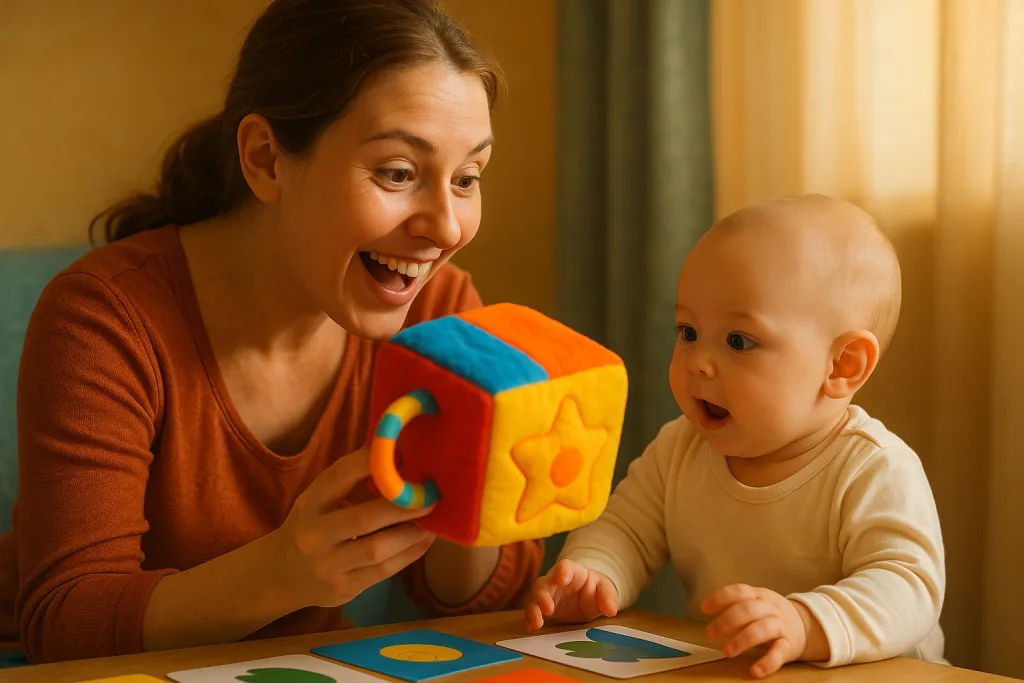
Unlocking Young Minds in Barnaul: Early Childhood Development with the Shichida Method
Early years are a window of opportunity — minds are highly plastic, imaginations boundless, and senses hungry for experience. The Shichida Method (метод Шичида) focuses on whole‑brain development in infancy and preschool years with targeted, playful stimulation designed to boost memory, creativity, intuition and rapid information processing. Below is a practical, parent‑friendly guide tailored for families in Barnaul: what the method is, how to apply it at home and how to evaluate local centers.
What is the Shichida Method (brief)
— Developed by Dr. Makoto Shichida in Japan, the method emphasizes right‑brain stimulation in early childhood to develop photographic memory, imagination and rapid cognition.
— Uses short, frequent sessions and activities such as picture flashcards, guided imagery, music, sensory play and creative storytelling.
— Focuses on a nurturing, pressure‑free environment — learning through play, affection and repetition.
Why it can benefit cognitive and creative abilities
— Encourages rapid visual recognition and memory via short, high‑quality stimuli.
— Stimulates imagination and creative thinking through visualization and open‑ended play.
— Builds attention capacity, auditory discrimination and pattern recognition with music and rhythm activities.
— Supports bilingual exposure, problem solving and emotional intelligence when integrated with responsive parenting.
Note: claims vary; results depend on consistency, child temperament, and overall environment. Complement Shichida‑style activities with plenty of free play, sleep, nutrition and outdoor time.
Core principles you can use today
— Short and frequent: 3–10 minutes, 2–6 times daily for young children.
— Multisensory stimulation: combine visual, auditory, tactile, and emotional cues.
— Positive emotional context: affection and praise amplify learning.
— Rhythm and routine: predictable micro‑sessions anchor new skills.
— Imagination practice: guided imagery and storytelling to strengthen right‑brain pathways.
Age‑tailored activities (practical, home‑ready)
0–12 months
— Face time and eye contact, exaggerated “parentese” speech, lullabies and simple classical music.
— Gentle visual tracking: high‑contrast cards, mobiles.
— Tactile variety: different fabrics, safe household objects.
— Mirror play and responsive vocal imitation.
1–3 years
— Fast‑presentation picture cards (5–10 seconds) of familiar objects, animals and scenes.
— Short guided imagery: “Imagine a red balloon flying over the river.”
— Pretend play and role‑play with simple props.
— Sensory bins, rhythm clapping and call‑and‑response songs.
— Introduce two languages naturally — short, consistent phrases in each language.
3–6 years
— Story creation games: child tells a story from a single image; parent expands it.
— Creative drawing with prompts (no right answer).
— Memory sequences (3–6 items), dot cards and pattern spotting.
— Open‑ended STEM play: building blocks, water play, nature collections.
— Rapid recognition games expanding to longer intervals.
Sample daily micro‑session (5–7 minutes)
— 30 seconds: warm‑up — smile, eye contact, song.
— 2 minutes: fast‑flash cards (clear, colourful images).
— 1–2 minutes: guided imagery or storytelling (1 vivid scene).
— 1–2 minutes: creative response — drawing, movement, mimicry.
— End with praise and a hug.
Weekly sample plan for a Barnaul family (seasonal tips)
— Monday: Indoor flashcards + classical music/relaxation (morning).
— Tuesday: Nature walk along the Ob River bank (summer) / indoor sensory path (winter).
— Wednesday: Story‑creation + drawing session (after nap).
— Thursday: Rhythm and movement, clapping patterns, musical games.
— Friday: Pretend play with props; vocabulary expansion.
— Weekend: Family outing — market, museum, park; encourage observation and description.
Seasonal adjustments: In Barnaul winters, prioritize rich indoor sensory play, home‑made obstacle courses, and auditory games. In warm months, use Altai nature for multisensory exploration — textures, smells, birds — and document experiences with photos for later flashcard use.
Choosing a Shichida or early‑development center in Barnaul — checklist
Ask the center:
— Are instructors certified in the Shichida method? What training do they have?
— What is the age range and class size?
— How long are sessions and how frequently do they run?
— Can parents observe a trial class?
— What materials and assessment methods are used?
— How is progress communicated to parents?
Red flags:
— Long, repetitive sessions that feel like drilling.
— Guaranteed “genius” outcomes or medical claims.
— No transparency about teacher training or curriculum.
Where to look locally
— Search in Russian: «Шичида Барнаул», «детский развивающий центр Барнаул».
— Check VK (ВКонтакте) parenting groups, Yandex Maps listings and local Facebook pages.
— Ask pediatricians and early education teachers for referrals.
Low‑cost materials and resources to start now
— Homemade high‑contrast cards (print or draw large clear images).
— A simple recorder or playlist of classical and nature sounds.
— Blank paper, crayons, recycled boxes for imaginative play.
— Everyday objects for sensory bins: rice, pasta, spoons, fabrics.
— Photo album of family outings for memory and storytelling prompts.
Safety and realistic expectations
— Keep sessions playful and pressure‑free — stress undermines learning