
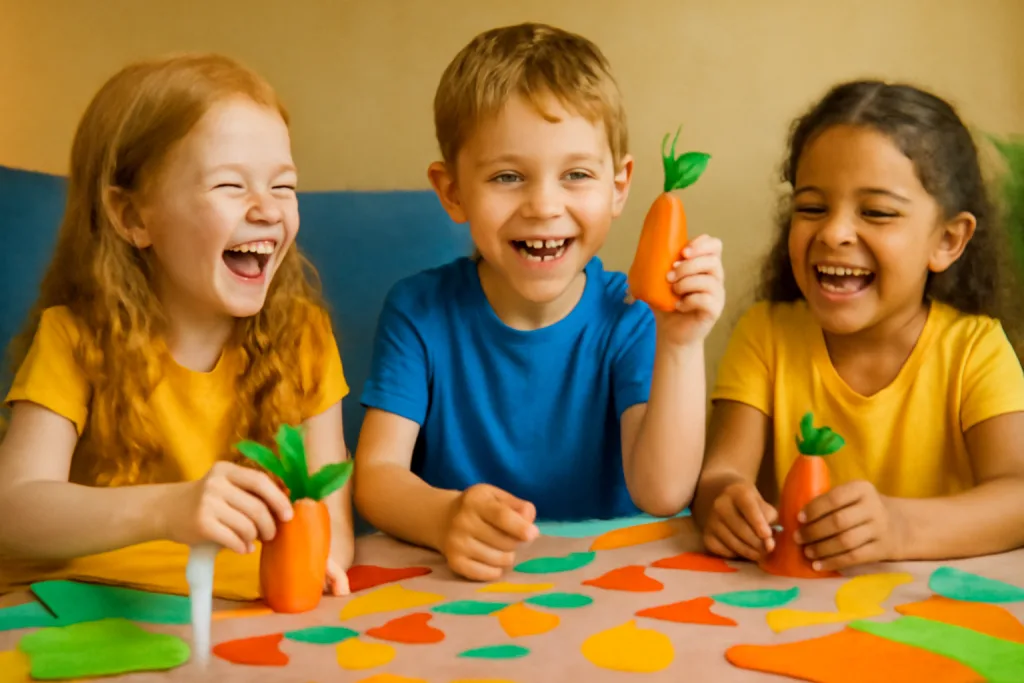
What the Shichida Method Is — and Why Barnaul Parents Should Care
The Shichida Method is a structured early-childhood education approach developed in Japan to stimulate both the left and right hemispheres of the brain during the critical early years. It blends short, high-quality lessons with play, sensory experiences, music, memory exercises and parent involvement to build *attention, memory, imagination, intuition and creativity* — skills that set children up for faster, deeper learning later in life.
In Barnaul, where families value education and creativity, the Shichida approach can be a compact, effective way to give children an early edge without turning childhood into forced academic work.
Key Benefits for Cognitive and Creative Development
— Improved short- and long-term *memory* through pattern recognition and visual training
— Faster *information absorption* and better concentration via short, focused sessions
— Enhanced *right-brain* abilities: imagination, visualization, intuition and holistic thinking
— Better *creative expression* through art, storytelling and open-ended play
— Early *language and numeracy* readiness built on fun, multimodal exposure
— Strong parent–child bond through guided activities and shared learning
Who Can Benefit and When to Start
— Ideal ages: from infancy up to about 6–7 years (the method is often introduced from birth to 3 years for rapid gains; structured lessons continue up to early school age)
— Suitable for: typically developing children, children with high curiosity, and parents who want a balanced, play-based cognitive boost
— Flexibility: sessions are short and frequent, which works well with infants’ and toddlers’ attention spans
What a Typical Shichida-Based Program Looks Like
— Short daily or several-times-a-week sessions (10–30 minutes depending on age)
— Mix of activities: flash-image exercises, rapid storytelling, music & rhythm, sensory play, memory games, picture cards, and creative tasks
— Strong parent involvement: parents receive guidance and practice activities to reinforce learning at home
— Balanced emphasis on both structured stimuli (e.g., right-brain flash cards) and free creative play
Practical Activities You Can Do at Home (Barnaul-Friendly)
— Quick visual memory drills: show 3–6 picture cards for 1–3 seconds, then ask your child to recall — make it a playful challenge
— Story flip: tell a short story with open-ended prompts (“What happens next?”) to spark imagination
— Nature treasure boxes: seasonal walks in Central Park or near the Ob River; collect items and sort by texture, color, sound
— Musical pattern games: use simple percussion or phone apps to repeat rhythms and create variations
— Mirror play: copy facial expressions to boost emotional recognition and focus
— Bilingual exposure: short, consistent words or songs in Russian and another language (English) to enhance language flexibility
— Shadow and silhouette drawing: create simple silhouettes and ask children to invent stories about them
— Sensory jars and tactile paths: use local natural materials (pine cones, pebbles) for safe sensory exploration
Sample Weekly Mini-Plan (Ages 2–4)
— Monday: Visual memory games (10–15 min) + free drawing (10 min)
— Tuesday: Music & rhythm play (15 min) + story time with open-ended questions (10 min)
— Wednesday: Nature walk + treasure box sorting (20–30 min)
— Thursday: Flash-image review (10 min) + role-play/puppet storytelling (15 min)
— Friday: Creative construction (blocks, clay) (20–30 min)
— Weekend: Family creative day — gallery walk of the child’s work, gentle review of favorite memory cards
How to Choose a Shichida Program in Barnaul
— Look for certified Shichida instructors or centers that can show training credentials
— Ask to observe a lesson or attend a free trial class — lessons should be short, lively and parent-friendly
— Small group sizes and individualized attention are important for best results
— Check parent reviews in local VK groups, Telegram channels, and Google Maps (search “Шичида Барнаул”)
— Ask about how progress is measured and how parents are coached to continue learning at home
Evidence & Realistic Expectations
— The Shichida Method emphasizes early stimulation rather than “magic.” Many parents report improved attention, memory recall and creativity; consistent practice is key.
— Outcomes vary with frequency, quality of instruction, and family reinforcement. Expect gradual improvements over months, not overnight miracles.
Common Questions
— How often should we practice? Short, daily or near-daily sessions are best. Even 10 minutes per day is effective if consistent.
— Is it too academic for toddlers? No — the method uses play, music and sensory activities so children enjoy learning.
— Can it replace preschool? It’s complementary. Shichida-style activities build foundational cognitive skills that benefit later preschool and school learning.
Tips for Barnaul Parents
— Use the city’s parks and seasonal changes as learning labs — winter sensory bins, spring nature sorting, autumn color hunts
— Join local parent communities to swap materials and ideas (VK and Telegram are active in Barnaul)
— Keep sessions positive: celebrate small wins and focus on curiosity rather than test-like performance
Next Steps
— Try a one-week at-home routine based on the mini-plan above and observe how your child responds
— Search local listings for “Шичида Барнаул” or ask parenting groups for recommended certified instructors
— Book a trial class with a reputable centre — watch for engaged children, clear teacher guidance, and constructive parent feedback
Embrace early stimulation as a joyful, shared journey — with the right mix of play, short focused exercises and parent involvement, you can help your child in Barnaul strengthen both cognitive and creative abilities that will matter for life.